

Transform Your Fitness Routine with Personalized Workout Classes in Auburn
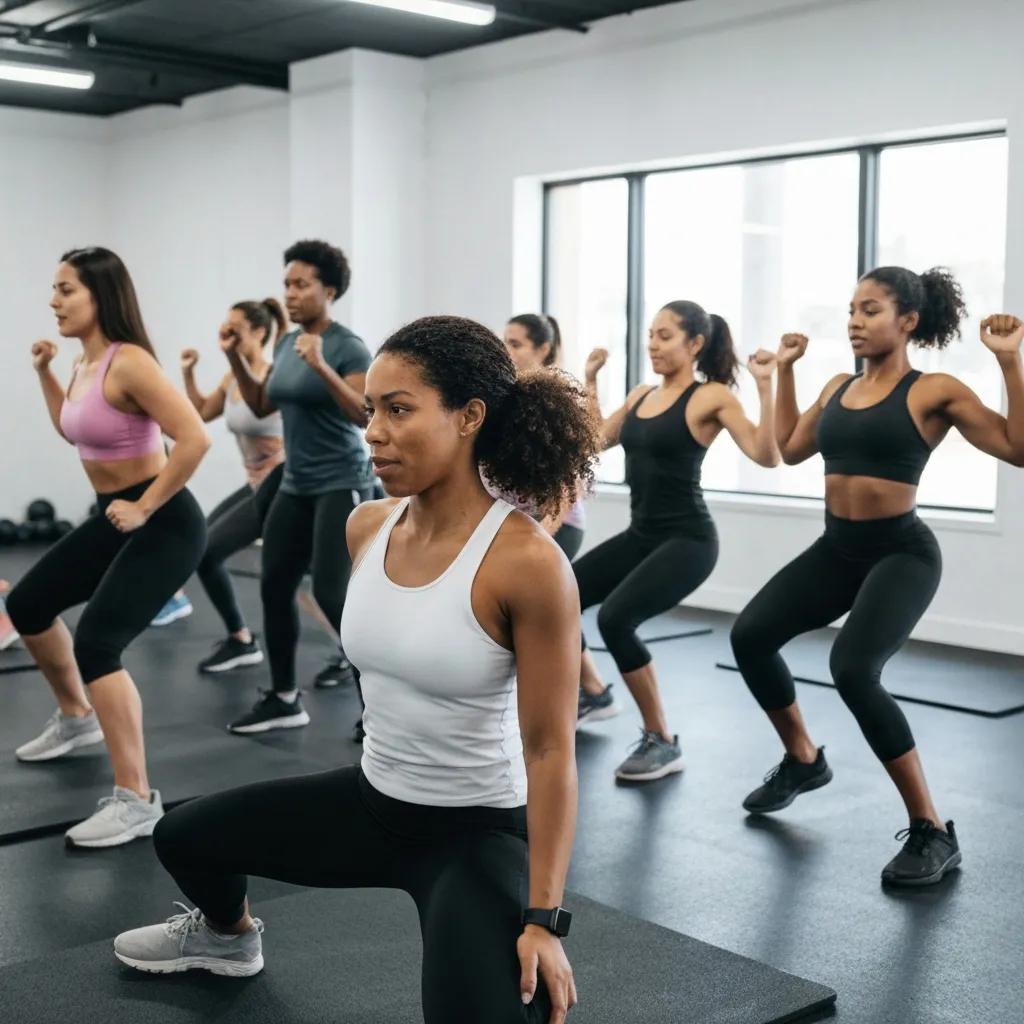
Personalized workout classes in Auburn combine tailored programming with local convenience to accelerate progress and reduce injury risk. This article explains what personalization means, how small group and one-on-one formats differ, and why credentialed trainers matter for safe, measurable results. Readers will learn the assessment-to-program process, practical scenarios for choosing small group versus private training, and how nutrition and recovery support amplify exercise outcomes. Pain points like slow progress, confusing programs, and lack of accountability are addressed with actionable guidance on trialing classes, comparing formats, and verifying trainer qualifications. The following sections cover definitions and benefits, small group advantages, one-on-one effectiveness, and the broader support trainers provide—each tuned to Auburn residents seeking customized fitness options.
What Are Personalized Workout Classes and How Do They Benefit You in Auburn?
Personalized workout classes are structured fitness sessions designed around individual assessments, specific goals, and progressive adaptations to training stimulus. They work by mapping an initial assessment to a tailored program, applying progressive overload and movement modifications to produce measurable gains while limiting injury. The primary result is faster, more efficient progress toward strength, conditioning, or mobility goals compared with one-size-fits-all classes. Understanding these mechanisms clarifies why personalization outperforms generic gym programs for busy Auburn residents.
- Faster progress through individualized progressions and load management.
- Reduced injury risk by modifying movements and monitoring form.
- Greater time efficiency by prioritizing goal-relevant exercises.
These benefits make personalized classes ideal for people seeking measurable change without wasted gym time.
The table below summarizes common program attributes to help you compare formats at a glance.
| Program Type | Typical Class Size | Customization Level |
|---|---|---|
| One-on-one training | 1:1 | High |
| Small group personal training | 4–8 | Moderate-to-high |
| Semi-private training | 2–4 | High per participant |
How Do Customized Fitness Plans Improve Your Results?
Customized fitness plans improve results by starting with a focused assessment that identifies movement limitations, strength imbalances, and aerobic capacity. Trainers translate assessment findings into a periodized plan that sequences phases—foundation, load progression, and peak performance—to avoid plateaus and encourage steady adaptation. Regular progress tracking uses objective metrics like load, reps, and movement quality to adjust programming responsively. These elements together create a feedback loop that accelerates outcomes while reducing trial-and-error time.
This assessment-to-plan process connects directly to why many clients see quicker strength and conditioning gains than with generic routines. That connection leads naturally into why personalized training beats unstructured gym sessions for long-term adherence.
The creation of a training plan involves translating scientific principles into practical application, acknowledging that while evidence-based approaches are ideal, real-world plans are often “evidence-informed” due to the complexity and variability of individual responses.
Personalized, Evidence-Informed Fitness Training Plans
A training plan, or an exercise prescription, is the point where we translate sport and exercise science into practice. As in medicine, good practice requires writing a training plan or prescribing an exercise programme based on the best current scientific evidence. A key issue, however, is that a training plan or exercise prescription is typically a mix of many interacting interventions (e.g. exercises and nutritional recommendations) that additionally change over time due to periodisation or tapering. Thus, it is virtually impossible to base a complex long-term training plan fully on scientific evidence. We, therefore, speak of evidence-informed training plans and exercise prescriptions to highlight that only some of the underlying decisions are made using an evidence-based decision approach. Another challenge is that the adaptation to a given, e.g. endurance or resistance training programme is often highly variable. Until biomarkers for trainability are identified, we must therefore continue to test athletes, clients, or patients, and monitor training variables via a training log to determine whether an individual sufficiently responds to a training intervention or else re-plan. Based on these ideas, we propose a subjective, pragmatic six-step approach that details how to write a training plan or exercise prescription that is partially based on scientific evidence. Finally, we advocate an athlete, client and patient-centered approach whereby an individual’s needs and abilities are the main consideration behind all decision-making. This implies that sometimes the most effective form of training is eschewed if the athlete, client or patient has other wishes.
Personalized, evidence-informed training plans and exercise prescriptions for performance, fitness and health, H Wackerhage, 2021
Why Choose Personalized Training Over Generic Gym Workouts?
Personalized training beats generic gym workouts because a coach prescribes exercises based on your goals and corrects technique in real time, which increases training efficiency and safety. Personalized plans eliminate unnecessary volume and focus on high-impact movements that produce faster strength or endurance improvements. Accountability from scheduled sessions and coach feedback also raises adherence and effort, which are primary drivers of results. Finally, personalization integrates recovery and lifestyle factors so progress is sustainable rather than transient.
Choosing personalized work over unguided sessions reduces wasted time and improves confidence in movement, which is especially valuable if you have prior injuries or specific performance goals.
How Can Small Group Personal Training in Auburn Help You Achieve Your Fitness Goals?
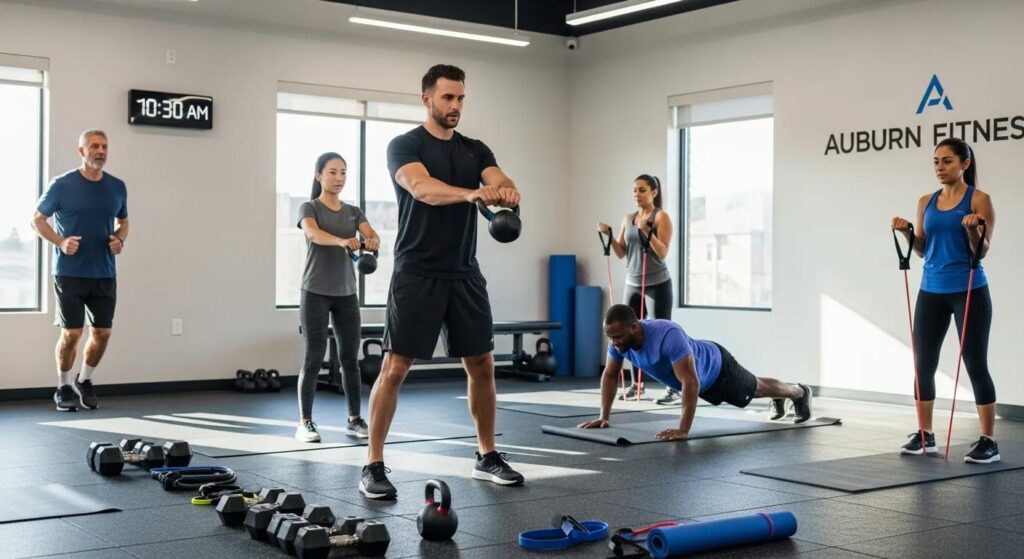
Small group personal training in Auburn blends coach-led programming with peer motivation to offer cost-effective personalization and social accountability. Coaches design sessions for a small cohort so each participant receives technique corrections, scaled progressions, and targeted variations that reflect individual needs. The social environment boosts adherence through group norms and shared milestones, while the coach monitors progress to keep adaptations evidence-based. This format suits people targeting weight loss, general fitness, or functional conditioning who want affordable attention from a certified trainer.
Small group training delivers three core advantages compared to solitary gym workouts:
- Cost-effectiveness: Shared coaching reduces per-person cost while retaining personalization.
- Community motivation: Peers encourage consistency and higher effort during sessions.
- Tailored progression: Coaches scale exercises so each participant advances safely.
These advantages usually make small group options a strong first step before committing to intensive one-on-one coaching. Below is a quick comparison of small group versus one-on-one training on common decision metrics.
| Format | Cost Indicator | Personalization | Typical Participants |
|---|---|---|---|
| Small group training | Moderate | Moderate | 4–8 people |
| One-on-one training | Higher | High | 1 person |
| Semi-private training | Moderate-high | High | 2–4 people |
This table helps Auburn residents weigh budget against personalization to choose the right path for their goals.
After considering small group benefits and formats, many locals take a low-commitment next step: request a trial class or ask for schedule and pricing options to compare real sessions before committing.
What Are the Advantages of Small Group Fitness Classes?
Small group classes provide structured workouts with coach attention while keeping the price per person lower than private sessions. Coaches deliver corrections, regressions, and progressions that fit different ability levels within the same class plan. The format encourages healthy competition and accountability, which elevates workout intensity and consistency. Participants also learn from peers’ cues and adaptations, improving movement literacy across the group.
How Does Small Group Training Foster Community and Accountability?
Small group training fosters community through consistent meeting times, shared goals, and cohort-based progress checks that create a sense of belonging. Regular companions provide informal accountability—text check-ins or gym meetups—that increase attendance and effort between sessions. Coaches can set collective milestones and celebrate group achievements, which deepens engagement and retention. Peer feedback and observation also reinforce technique learning and safety, creating a supportive learning loop.
Community-built accountability is often what moves sporadic gym-goers into consistent training rhythms, especially in a local context like Auburn.
The integration of technology, such as mobile devices, can enhance personalized fitness training by enabling individualized skill assessment and providing automated feedback to track training quality and effectiveness.
Personalized Fitness Training with Mobile Devices
The mobile fitness coach: Towards individualized skill assessment using personalized mobile devices. The system showed good evaluation results in an evaluation against manual expert assessment, and personalized automated feedback on the phone, with the goal to track training quality and effectiveness.
The mobile fitness coach: Towards individualized skill assessment using personalized mobile devices, M Kranz, 2013
What Makes One-on-One Personal Training in Auburn Effective for Your Fitness Transformation?
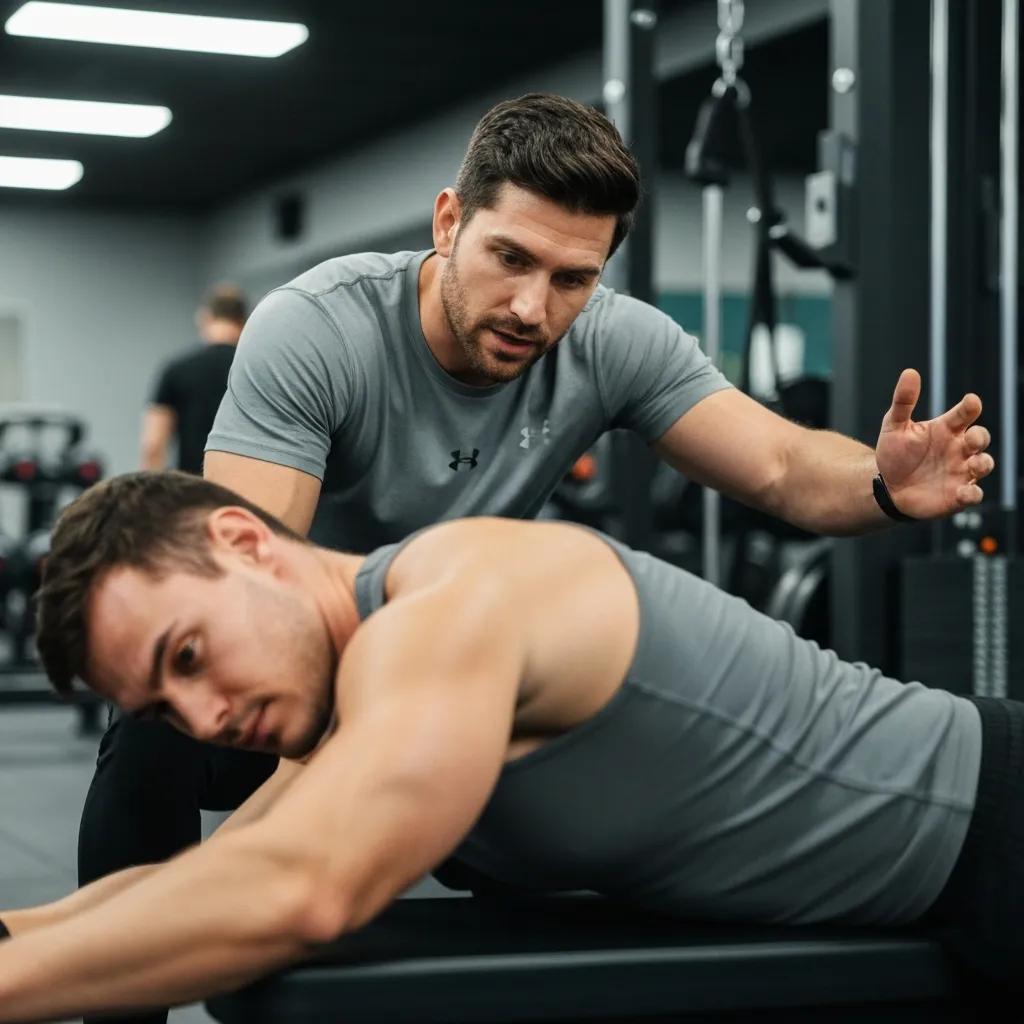
One-on-one personal training offers the highest degree of individualization because every element—exercise selection, load progression, and recovery strategy—is tailored to one client’s needs. Trainers conduct detailed movement and fitness assessments then apply periodized programming to target specific outcomes such as rehabilitation, athletic performance, or rapid body composition change. Real-time coaching ensures immediate technique correction, minimizing compensations that slow progress or cause injury. For those with complex goals or medical considerations, private training delivers the fastest, safest return on investment.
When selecting a private trainer, prioritize credentialed professionals who can translate assessment data into evidence-based programs. The next subsections explain how certified trainers design plans and what a typical session looks like.
How Do Certified Auburn Personal Trainers Customize Your Workout Plans?
Certified trainers begin with a formal fitness assessment that measures mobility, strength, posture, and cardiovascular baseline to identify priorities and constraints. They convert assessment results into a phased plan with specific metrics—load targets, volume, and performance tests—for objective progress tracking. Trainers use corrective exercises, targeted conditioning, and progressive overload to align programming with the client’s timetable and recovery capacity. Ongoing client feedback and periodic re-testing guide iterative adjustments to maintain continuous improvement.
This credential-informed approach reduces guesswork and provides measurable milestones that keep clients motivated and progressing.
What Can You Expect During a One-on-One Training Session?
A typical one-on-one session starts with a brief movement-specific warm-up tailored to the session’s focus, followed by main sets where the coach cues technique and adjusts load in real time. Sessions commonly end with a cool-down and brief coaching notes or “homework” such as mobility drills or nutritional suggestions to support recovery. Trainers often record session data—weights, reps, perceived exertion—to inform subsequent sessions and program tweaks. This structure ensures each session contributes directly to the broader training plan and long-term goals.
Clear session structure and tracking make private training efficient and goal-driven for motivated Auburn clients.
How Do Auburn Personal Trainers Support Your Fitness Journey Beyond Workouts?
Trainers extend value beyond exercise by offering nutrition guidance, recovery protocols, and lifestyle coaching that align daily habits with training demands. Nutrition coaching tends to focus on sustainable habit change, macronutrient alignment, and meal timing to support energy, recovery, and body composition goals. Recovery guidance includes sleep strategies, mobility routines, and periodized deloads to prevent overtraining and preserve progress. These support services form a holistic program that amplifies the effects of in-session work and makes results sustainable.
The table below maps common support services to expected outcomes to help you decide which extras matter most for your goals.
| Support Service | Typical Scope | Primary Outcome |
|---|---|---|
| Nutrition coaching | Habit-based plans, macro targets | Improved recovery and composition |
| Progress tracking | Session logs, re-testing | Objective performance gains |
| Recovery guidance | Mobility, sleep, deloads | Injury prevention and consistency |
This mapping clarifies how non-exercise interventions accelerate fitness transformations for Auburn clients.
When evaluating trainers, ask to see certifications and continuing education credentials—NASM is an example of a credential that indicates formal training in exercise science and program design. Checking qualifications and asking about evidence-based approaches helps you choose trainers who prioritize safety and results. For practical next steps, request trainer credentials and a brief consultation to compare approaches before committing.
Achieving sustainable fitness requires a balanced approach that integrates regular exercise with sufficient rest and appropriate nutrition to support the body’s needs for energy, repair, and overall well-being.
Building a Sustainable Fitness Routine: Exercise, Rest, and Nutrition
A wellrounded fitness routine includes adequate physical activity that challenges the body, rest days that allow for recovery, and nutrition that supports energy needs, muscle repair, and overall well-being. Balancing these components is crucial for long-term adherence and achieving fitness goals.
Building a Sustainable Fitness Routine: Balancing Exercise, Rest, and Nutrition, MS Kumar, 2024
Frequently Asked Questions
What should I look for when choosing a personal trainer in Auburn?
When selecting a personal trainer in Auburn, prioritize their credentials and experience. Look for certifications from reputable organizations, such as NASM or ACE, which indicate a solid foundation in exercise science. Additionally, consider their specialization—whether they focus on weight loss, strength training, or rehabilitation. It’s also beneficial to read reviews or testimonials from previous clients to gauge their effectiveness and approach. Finally, schedule a consultation to discuss your goals and see if their training style aligns with your needs.
How often should I attend personalized workout classes for optimal results?
For optimal results, attending personalized workout classes 2 to 4 times per week is generally recommended. This frequency allows for consistent training while providing adequate recovery time between sessions. The specific number may vary based on individual goals, fitness levels, and the intensity of the workouts. It’s essential to listen to your body and adjust attendance as needed, ensuring you maintain a balance between challenge and recovery to prevent burnout or injury.
Can personalized training help with specific medical conditions?
Yes, personalized training can be highly beneficial for individuals with specific medical conditions. Certified trainers often have the knowledge to design safe and effective programs tailored to accommodate various health issues, such as diabetes, arthritis, or cardiovascular concerns. They can modify exercises to ensure safety while promoting strength, flexibility, and overall fitness. Always consult with a healthcare provider before starting any new exercise program, and communicate your medical history to your trainer for the best outcomes.
What role does nutrition play in personalized fitness training?
Nutrition plays a crucial role in personalized fitness training as it directly impacts energy levels, recovery, and overall performance. Trainers often provide guidance on macronutrient balance, meal timing, and sustainable eating habits to complement workout goals. A well-structured nutrition plan can enhance the effectiveness of training sessions, support muscle recovery, and help achieve specific body composition goals. Collaborating with a trainer on nutrition ensures that dietary choices align with your fitness objectives for optimal results.
How can I track my progress in personalized training?
Tracking progress in personalized training can be achieved through various methods, including regular assessments, session logs, and performance metrics. Trainers typically conduct initial assessments to establish baselines for strength, endurance, and flexibility. They may also use tools like fitness apps or journals to log workouts, track weights lifted, and monitor improvements over time. Regular check-ins with your trainer can help adjust your program based on progress, ensuring you stay on track toward your fitness goals.
What are the benefits of combining personal training with group classes?
Combining personal training with group classes offers a unique blend of individualized attention and community support. Personal training provides tailored workouts that address specific goals, while group classes foster motivation and accountability through shared experiences. This combination can enhance adherence to fitness routines, as the social aspect of group classes encourages consistency. Additionally, the varied formats can prevent workout monotony, keeping your fitness journey engaging and effective as you progress toward your goals.
Conclusion
Personalized workout classes in Auburn offer tailored programming that accelerates progress while minimizing injury risk, making them an ideal choice for fitness enthusiasts. By understanding the unique benefits of small group and one-on-one training, individuals can make informed decisions that align with their specific goals. Engaging with credentialed trainers ensures a safe and effective path to achieving measurable results. Take the next step in your fitness journey by exploring our personalized training options today.