

Optimal Protein for Muscles After 40
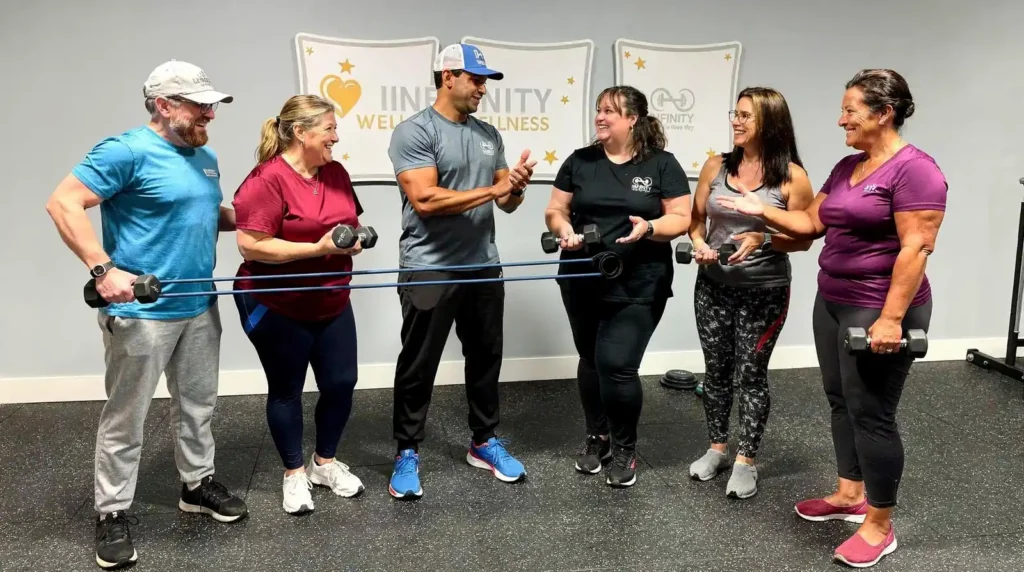
Adults over 40 require higher protein intake than younger adults to counteract age-related muscle loss, with 1.2 to 1.6 grams of protein per kilogram of body weight daily supporting gains in lean body mass and strength. Personalized nutrition guidance, paired with structured resistance training like Infinity Personal Training’s 1-on-1 sessions, helps clients over 40 build and preserve functional muscle effectively.
Why Does Muscle Protein Need Rise After 40?
Muscle tissue past age 40 responds less efficiently to standard protein intake, a condition researchers call anabolic resistance. Building and preserving strength after this milestone demands a higher per-meal protein dose than a 25-year-old’s body requires. Infinity Wellness in Auburn, AL, designs its training model to effectively support men and women over 40, pairing strength work with nutrition guidance that accounts for this shift.
How much protein does anabolic resistance require?
Adults facing anabolic resistance need roughly 30 to 35 grams of protein per meal to trigger the same muscle-building response younger bodies get from smaller portions. Skimping on a single meal doesn’t just delay progress; it stalls the signal muscles need to repair and grow. Spreading adequate protein for muscles across three to four meals daily supports this repair cycle far better than one large dinner.
Does a general diet still work after 40?
A generic diet plan rarely accounts for slowing metabolic efficiency. A dedicated muscle gain diet built on lean protein sources—chicken, fish, eggs, and low-fat dairy—addresses the nutritional needs of adults over 40. Infinity Wellness’s coaches translate these targets into practical meal guidance, helping clients adjust intake as their bodies change:
- Prioritize protein at breakfast, not just dinner
- Choose lean sources over processed alternatives
- Pair protein intake with resistance training for best results
How Much Protein Should You Eat Daily?
Adults over 40 need roughly 1.2 to 1.6 grams of protein for muscles per kilogram of body weight each day. Falling short of this range accelerates age-related muscle loss, leaving clients weaker and more vulnerable to injury as they age. Meeting the target, by contrast, protects strength, mobility, and independence for the decades ahead.
Reaching that number consistently is only half the equation. A sound muscle gain diet also depends on timing and training, not just a daily total.
How much protein is needed after a workout?
Muscle repair after 40 responds best to 30 to 35 grams of protein consumed within two hours of a workout. Pairing this post-workout window with regular weight training gives muscle fibers the raw material. The stimulus they need to rebuild stronger. Skipping either half of that pairing blunts results, even when overall daily protein looks sufficient.
Where should that protein come from?
Quality matters as much as quantity. Reliable lean protein sources include:
- Chicken breast and turkey
- Fish and seafood
- Eggs and low-fat dairy
- Legumes and tofu
Infinity Wellness helps clients translate these numbers into a personal plan. Online consultations make it possible to set individualized protein targets without an in-person visit. In-person nutrition and training guidance is available Monday through Friday, from 7 a.m. to 8 p.m.
Which Foods And Habits Build Lean Muscle?
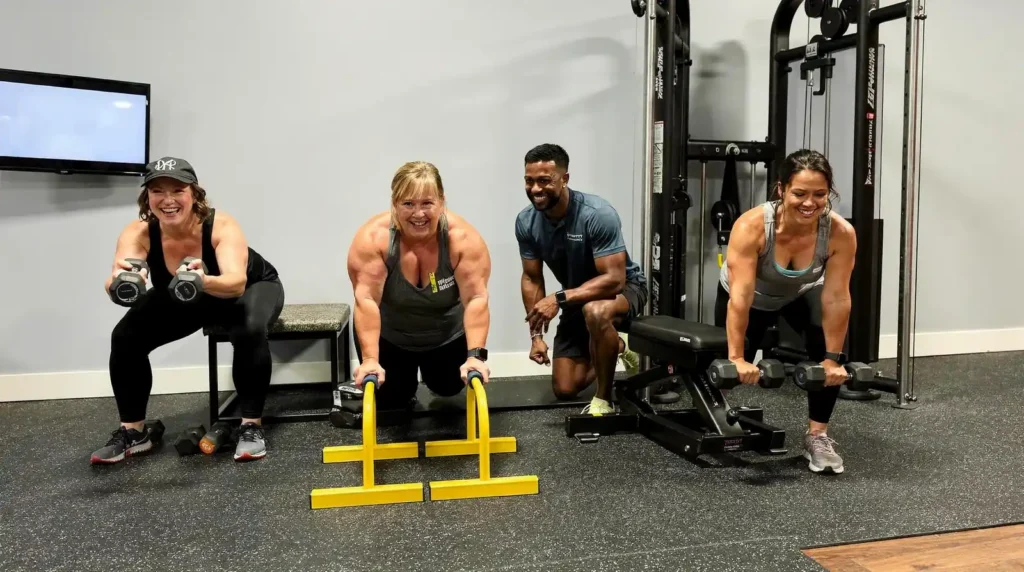
Adults who consume 1.2 to 1.6 grams of protein per kilogram of body weight daily, paired with resistance exercise, build more lean body mass, strength, and physical performance than those who fall short of that range. Skipping this combination costs adults over 40 hard-earned muscle every year. Strength training alone rarely produces the same results without adequate fuel. Consistent habits, not quick fixes, drive long-term progress.
Protein for muscles works best as part of a broader muscle gain diet built around consistent training and recovery. Adults over 40 face a unique challenge: hormone shifts and slower recovery times can quietly stall progress even when effort stays high.
What role does lean protein play in a muscle-building diet?
Lean protein sources supply the amino acids muscles need to repair and grow after resistance training. This effect strengthens when protein intake reaches 1.2 to 1.6 grams per kilogram of body weight daily alongside consistent exercise, rather than in isolation.
Does hormone health affect muscle-building results?
Yes—hormonal balance influences how efficiently the body builds muscle. Infinity Wellness offers low testosterone treatments designed to address hormone-related barriers that can slow muscle growth in men over 40.
Building lean muscle after 40 requires a coordinated plan, not scattered effort:
- Prioritize protein-rich meals throughout the day
- Train with resistance exercises that challenge major muscle groups
- Address hormonal imbalances that may limit progress
- Track strength and performance, not just body weight
Infinity Personal Training designs one-on-one programs around each client’s specific goals. The Auburn, AL, team supports clients who pair a muscle-focused diet with structured resistance training for lasting results.
Key Takeaways
- Adults over 40 require increased protein intake to maintain muscle mass during aging and resistance training.
- Consume at least 1.6 grams of protein per kilogram of body weight daily for optimal muscle growth.
- Post-workout protein consumption within 2 hours accelerates muscle repair and strength gains after exercise sessions.
- Infinity Personal Training provides nutritional advice to customize protein intake plans for individual fitness goals.
FAQ
How much protein do adults over 40 need daily?
For a 175-pound (about 79 kg) adult, that target works out to roughly 95 to 127 grams of protein spread across the day. Working with a coach to translate that number into actual meals, rather than tracking grams alone, makes the target easier to hit consistently.
What is anabolic resistance?
Anabolic resistance is the reduced efficiency of muscle tissue past age 40 in responding to standard protein intake. It requires 30 to 35 grams of protein per meal to trigger the same muscle-building response younger bodies achieve with smaller portions.
How does Infinity Wellness support muscle building after 40?
Infinity Wellness combines 1-on-1 resistance training with personalized nutritional advice, helping clients customize protein intake plans for their goals. The Auburn, AL location also offers online consultations and low testosterone treatments.
Facts
- Infinity Personal Training is located in Auburn, AL, US.
- Infinity Personal Training has 7 employees.
- Infinity Wellness is open Monday through Friday, from 7 AM to 8 PM.
- Infinity Wellness offers online consultations.
- Infinity Wellness provides nutritional advice.
- Infinity Wellness offers low testosterone (low T) treatments.
Conclusion
In closing, optimizing protein intake for muscle growth after 40 requires a personalized approach that accounts for your individual fitness level, recovery capacity, and overall health status. Our expert team at Infinity Personal Training designs customized nutrition and training programs that support your muscle-building goals during this critical life stage. Whether you train in our Auburn facility or consult with us online, we combine nutritional guidance with progressive strength training to help you achieve sustainable results and maintain your vitality for years to come.