

How Small Group Workout Classes in Auburn Boost Motivation

Small group workout classes bring together focused instruction, shared goals, and scheduled sessions to create a motivational environment that improves adherence and accelerates results. This article explains how small group training in Auburn promote motivation through social support, accountability, and expert coaching so readers can translate those mechanisms into consistent training habits. Many people struggle to sustain regular exercise because of isolation, vague goals, or inconsistent feedback; small groups address these problems by making effort visible, measurable, and socially reinforced.
Below we unpack the psychological mechanisms, practical benefits of small-group personal training, the role of Auburn’s local fitness community, programming strategies that keep workouts engaging, and simple progress-tracking approaches members can use to stay motivated. Each section includes evidence-based reasons, concrete examples of class formats and tracking tools, and local-action suggestions tied to working with certified coaches and community classes in Auburn.
How Do Small Group Workout Classes in Auburn Enhance Motivation?
Small group workout classes are structured sessions where a certified coach leads a limited number of participants through a planned workout, and this format enhances motivation by combining social influence, external structure, and skill feedback. Social belonging increases intrinsic motivation because members identify with the group and adopt shared fitness goals, while scheduled sessions and attendance expectations create external anchors that support habit formation. small group training.
Expert coaching within the group supplies competence signals—corrections, progressions, and measurable benchmarks—that reinforce continued effort and perceived capability. These combined mechanisms result in higher workout consistency and greater willingness to increase effort over time, which naturally leads into how community support functions day-to-day in Auburn classes.
What Role Does Community Support Play in Boosting Motivation?
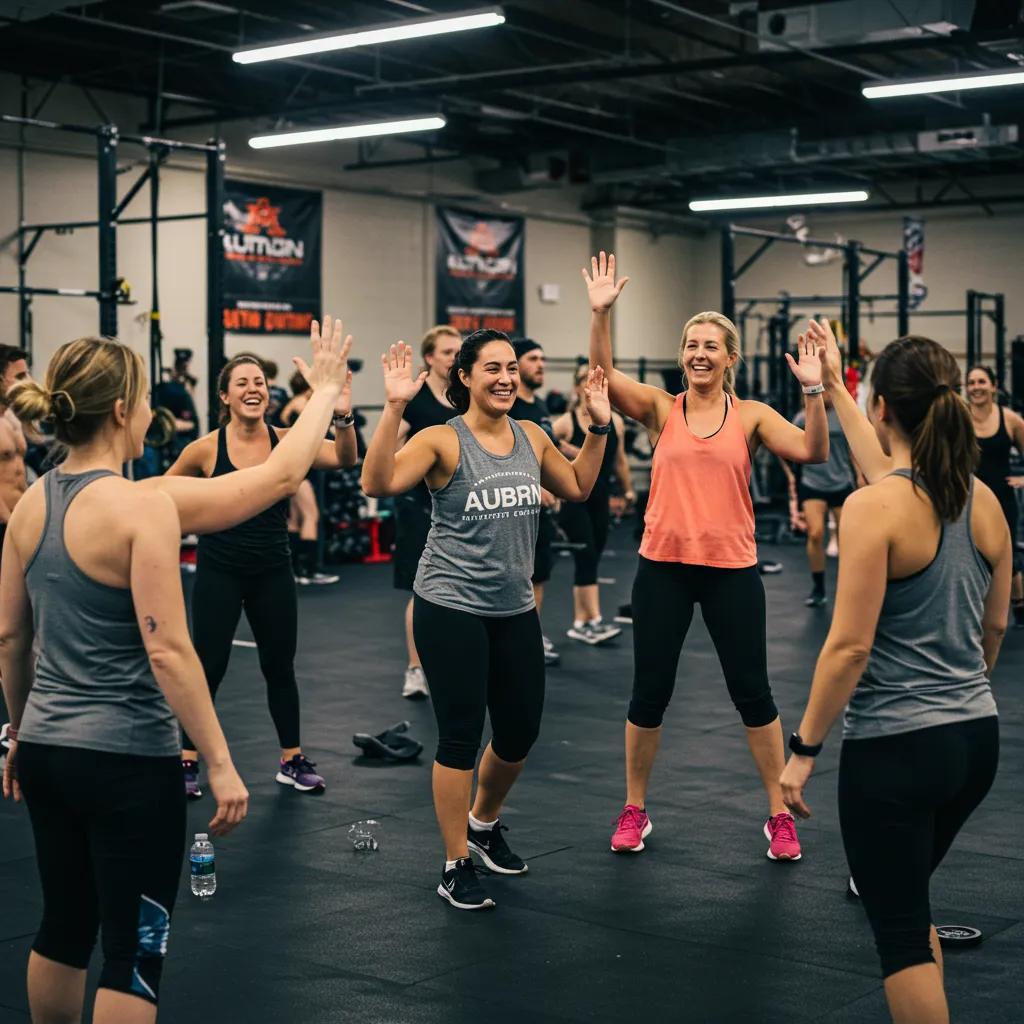
Community support in small groups fosters a sense of belonging where social identity and peer modeling make consistent attendance more rewarding. Members who see peers improve feel that the goals are attainable, which raises self-efficacy and reduces perceived exertion during workouts.
Emotional encouragement—verbal praise, partner high-fives, shared post-class rituals—creates positive associations with training that enhance persistence. These social processes are especially potent in Auburn, where local group norms and campus or neighborhood rhythms can sync training cycles and seasonal challenges.
Sense of Community in Group Exercise Facilitates Adherence
Community engagement has helped facilitate participant adherence, which is particularly applicable for group exercise programs. Developing a sense of community (SOC) helps participants feel that they belong and provides ongoing social support.
Incorporating a sense of community in a group exercise intervention facilitates adherence, KM Heinrich, 2022
How Does Accountability in Group Settings Improve Workout Consistency?
Accountability in groups works through predictable scheduling, visible attendance, and interpersonal expectations that reduce procrastination and no-shows. When peers expect you to show up and trainers note attendance or progress, avoidance behaviors drop and habit loops strengthen around consistent sessions. Practical accountability mechanisms include sign-up systems, buddy check-ins, and post-class recap messages that turn sporadic effort into repeatable routines. This structural accountability then supports more targeted, trainer-led personalization that improves technique and reduces injury risk in group settings.
What Are the Key Benefits of Small Group Personal Training in Auburn?
Small group personal training combines individualized coaching with group dynamics to deliver efficient, affordable, and community-driven fitness improvements that are ideal for people seeking both guidance and social support. Within a small group, trainers can tailor cues, scale loads, and stagger progressions while still maintaining class energy and mutual encouragement. The resulting benefits include improved technique, greater adherence, and cost-effectiveness versus one-on-one sessions, making this format attractive to many Auburn residents aiming for measurable fitness gains.
Below is a compact comparison of core benefit areas to help readers evaluate what matters most when choosing a small-group program.
| Benefit Area | Trainer/Program Attribute | Resulting Value |
|---|---|---|
| Personalized Attention | Lower trainer-to-participant ratio | Better form, tailored progressions |
| Community Support | Peer encouragement and group identity | Increased enjoyment and retention |
| Cost Efficiency | Shared coaching resource | Affordable access to expert guidance |
This table highlights how small-group programming balances individualization and community, translating coach expertise into sustained results for participants.
For readers looking to act locally, consider exploring Auburn small-group class options and ask whether trainers hold recognized certifications such as NASM; certified trainers are associated with evidence-based programming and safer progressions that support motivation by building trust in coaching.
How Does Personalized Attention in Small Groups Increase Engagement?
Personalized attention in small groups means trainers observe movement, give corrective feedback, and prescribe progressions that match individual readiness within the class structure. This targeted instruction increases perceived competence because members receive concrete direction and see incremental improvements in reps, load, or skill. When participants feel that workouts are adapted to them, enjoyment and commitment rise, reducing drop-off and promoting long-term adherence. That direct link between tailored coaching and engagement makes small-group personal training highly effective for consistent progress.
Why Is NASM Certification Important for Auburn Small Group Trainers?
NASM (National Academy of Sports Medicine) certification signals that a trainer has formal education in assessment, program design, and corrective strategies grounded in current exercise science. Working with NASM-certified trainers increases the likelihood that programs use safe progressions, measurable goals, and evidence-based cues that protect participants and promote steady gains. That expertise builds trust, which is a motivational asset: trainees who trust their coach demonstrate higher effort and lower dropout. Knowing a trainer’s credential therefore supports informed choices when joining Auburn group sessions.
How Does Auburn’s Fitness Community Impact Workout Motivation?
Auburn’s local fitness community amplifies motivation by creating accessible social networks where regular interaction normalizes training and offers multiple sources of reinforcement. Shared local events, seasonal goals, and neighborhood routines let groups synchronize efforts and celebrate progress in culturally relevant ways that strengthen commitment. The local context also provides repeated social exposures to exercise behaviors—seeing peers train regularly increases perceived desirability and lowers barriers to participation. These community dynamics lead naturally into how peer encouragement manifests in practical support for individual goals.
In What Ways Does Peer Encouragement Support Fitness Goals?
Peer encouragement operates through modeling, positive feedback, and social reinforcement that increase both effort and perceived competence during workouts. When classmates cheer for a heavier set or celebrate a personal record, those social signals increase dopamine-linked reward and make continued effort feel worthwhile. Practical tips to leverage peer encouragement include pairing up for accountability, sharing short-term goals publicly, and rotating partner roles to distribute support. These practices turn individual milestones into group wins and sustain motivation across training cycles. personal training
How Do Group Dynamics Foster a Positive Exercise Environment?
Group dynamics shape norms, rituals, and leader behaviors that create safe, challenge-friendly spaces where members feel permitted to push limits. Small rituals—consistent warm-ups, partner drills, and end-of-class debriefs—build cohesion and predictability, reducing intimidation and encouraging risk-taking in training. Trainers who enforce inclusive norms and cue constructive feedback further lower social friction and improve class culture. That positive environment then supports varied programming and progress tracking that keeps engagement high.
What Strategies in Small Group Classes Keep Workouts Engaging and Varied?
Effective small-group classes rotate formats, introduce progressive benchmarks, and use partner or team-based activities to combine novelty with measurable improvement, which sustains interest and motivation. Variety preserves the novelty effect, skill acquisition opportunities, and perceived challenge, while benchmarks provide concrete evidence of progress that reinforces continued participation. Below is a concise comparison of common class formats and their best-use cases to help readers choose sessions that match their goals in Auburn.
| Class Format | Intensity/Duration | Best For |
|---|---|---|
| HIIT | Short, high-intensity intervals | Time-efficient conditioning |
| Strength-focused | Moderate-to-high load, longer sets | Measurable strength gains |
| Circuit training | Rotating stations, mixed modalities | General fitness and engagement |
This table clarifies how selecting the right mix of formats supports both variety and targeted outcomes, helping participants stay motivated through visible progress.
Practical strategies for sustaining motivation include periodized cycles, themed sessions, and rotating partner work that alternates social roles and keeps classes fresh. The next section shows how tracking progress with simple metrics and group celebrations ties these strategies into measurable motivation gains.
Which Diverse Class Formats Are Offered in Auburn Small Group Training?
Auburn small-group offerings typically include HIIT for intense conditioning, strength-focused sessions for progressive overload, mobility or recovery classes for resilience, and circuit formats that mix modalities for variety. HIIT appeals to members seeking efficient cardiovascular gains and dynamic classes, while strength groups attract those focused on incremental load increases and measurable tests like rep maxes. Mobility and recovery sessions lower injury risk and improve consistency by addressing movement quality. Choosing a balanced schedule that alternates these formats delivers novelty and objective markers of improvement.
How Does Variety in Workouts Sustain Long-Term Motivation?
Variety sustains motivation by preventing habituation, offering continual skill learning, and enabling frequent small wins that reinforce commitment. Introducing new movement patterns, rotating training phases, and setting short-term themes produce repeated dopamine spikes tied to novelty and competence. Programming that aligns novelty with progressive benchmarks—such as monthly challenges or strength tests—keeps engagement high while still delivering measurable outcomes. This interplay of novelty and progress creates a durable motivational loop that tracking systems can capture. small group training
How Can Tracking Progress in Auburn Small Group Training Boost Motivation?
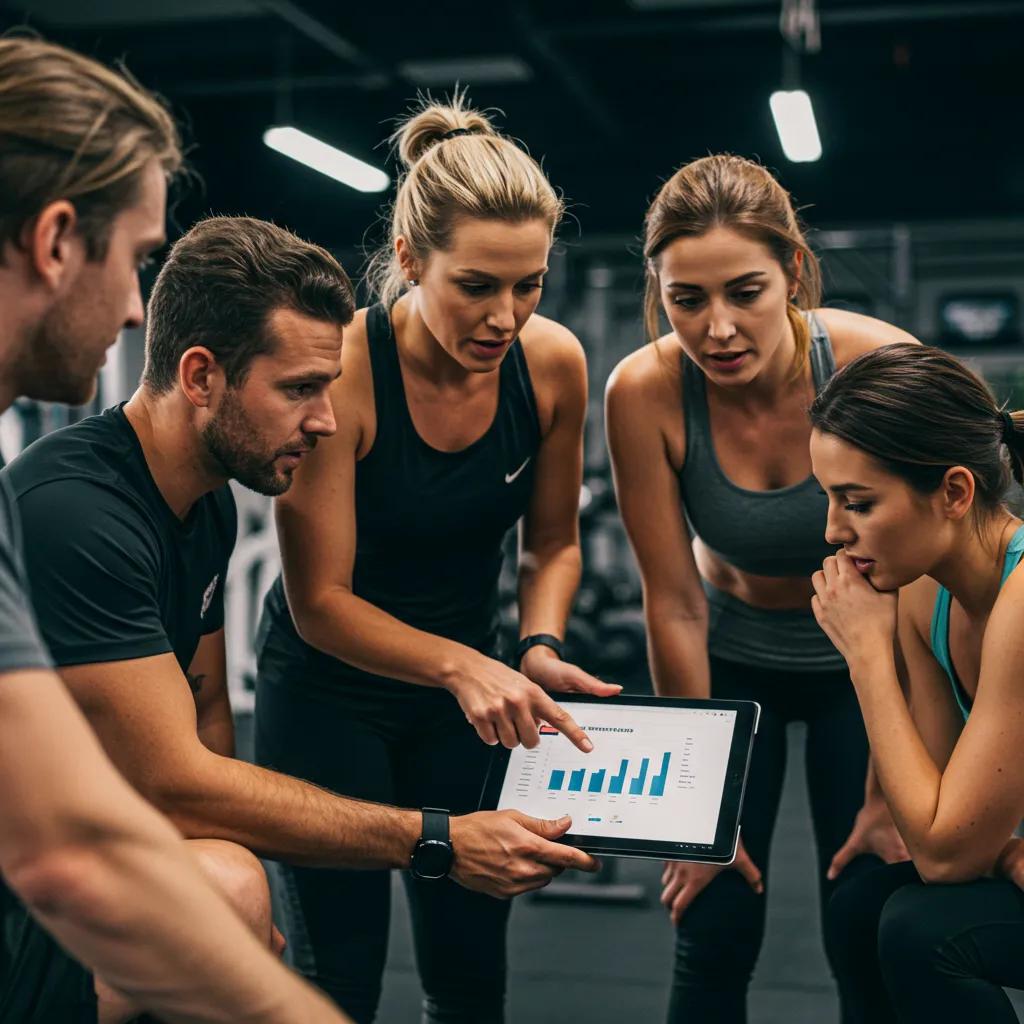
Tracking progress in small groups turns subjective impressions into objective evidence of improvement, and that measurable feedback strengthens goal pursuit through social accountability and reward signaling. Simple metrics—attendance, reps, load increases, timed efforts—make progress visible to individuals and the group, which increases commitment and supports adaptive programming. Implementing a few practical steps, such as SMART goals, baseline tests, and regular check-ins, converts training into a sequence of achievable milestones that the group can share and celebrate. The table below compares common tracking tools and their motivational effects to guide selection in Auburn settings.
| Tool/Technique | Metric Tracked | Motivational Effect |
|---|---|---|
| Attendance logs | Sessions attended | Builds habit and social obligation |
| Load/Reps tracking | Weight and repetitions | Shows progressive overload clearly |
| Simple apps/wearables | Time, heart rate, steps | Provides instant feedback and benchmarks |
This comparison demonstrates that even low-tech methods like attendance logs have high motivational impact when combined with group visibility and regular review. For local action, members should check Auburn class schedules or speak with NASM-certified trainers to set up tracking routines and goal reviews that fit their small-group format.
What Goal-Setting Techniques Are Used in Group Fitness Classes?
Group fitness classes use SMART goals, micro-goals, and shared targets to convert broad aspirations into measurable, time-bound steps that teams can support. SMART goals (specific, measurable, achievable, relevant, time-bound) provide clarity and criteria for assessing progress during check-ins. Micro-goals—short weekly targets—sustain momentum between larger milestones, while shared group challenges create mutual accountability and friendly competition. These techniques, combined with visible tracking, make achievement continuous and socially reinforced.
How Does Celebrating Achievements Together Enhance Motivation?
Celebrating achievements publicly—through shout-outs, milestone boards, or small in-class ceremonies—amplifies reward signals and strengthens group identity around progress. Recognition transforms individual improvements into social proof that effort yields results, encouraging observers to emulate successful behaviors. Regular celebrations also create positive associations with training that make attendance emotionally rewarding beyond physical gains. When combined with consistent tracking and coach feedback, shared celebrations close the loop between effort, evidence, and social reinforcement.
Frequently Asked Questions
What types of fitness goals can be achieved through small group classes?
Small group classes are designed to accommodate a variety of fitness goals, including weight loss, muscle gain, improved endurance, and enhanced flexibility. Participants can set personal objectives, such as completing a certain number of workouts per week or achieving specific performance metrics like lifting heavier weights. The supportive environment encourages individuals to pursue both short-term and long-term goals, making it easier to stay committed and track progress. Additionally, trainers can tailor workouts to align with these goals, ensuring that each participant receives the guidance they need to succeed.
How can beginners benefit from joining small group workout classes?
Beginners can greatly benefit from small group workout classes as they provide a structured and supportive environment for learning. With certified trainers leading the sessions, newcomers receive expert guidance on proper techniques and form, which is crucial for preventing injuries. The group setting also fosters camaraderie, making it less intimidating for beginners to engage in fitness activities. Moreover, the social aspect encourages accountability and motivation, helping beginners to build confidence and establish a consistent workout routine as they progress in their fitness journey.
What should participants look for when choosing a small group class?
When selecting a small group class, participants should consider several factors to ensure it aligns with their fitness goals and preferences. First, check the trainer’s qualifications and certifications, such as NASM, to ensure they have the necessary expertise. Next, evaluate the class size; smaller groups often provide more personalized attention. Additionally, consider the class format and intensity to match your fitness level. Finally, look for a supportive community atmosphere, as this can significantly enhance motivation and enjoyment during workouts.
How often should participants attend small group classes for optimal results?
For optimal results, participants should aim to attend small group classes at least 2 to 3 times per week. This frequency allows for consistent practice and adaptation to the workouts, which is essential for making progress. However, the ideal number of sessions may vary based on individual fitness levels, goals, and recovery needs. It’s important to listen to your body and adjust attendance accordingly. Combining small group classes with other forms of exercise, such as cardio or flexibility training, can also enhance overall fitness and prevent plateaus. You can learn more about small group training to optimize your fitness journey.
What role does nutrition play in conjunction with small group workouts?
Nutrition plays a crucial role in maximizing the benefits of small group workouts. Proper nutrition fuels the body, aids recovery, and supports overall fitness goals. Participants should focus on a balanced diet rich in whole foods, including lean proteins, healthy fats, and plenty of fruits and vegetables. Staying hydrated is also essential for optimal performance during workouts. Many small group classes may offer nutritional guidance or resources, helping participants understand how to complement their exercise routines with healthy eating habits for better results.
Can small group classes accommodate individuals with specific fitness needs or limitations?
Yes, small group classes can often accommodate individuals with specific fitness needs or limitations. Certified trainers are trained to modify exercises and provide alternative options to ensure that all participants can engage safely and effectively. Whether someone is recovering from an injury, has a chronic condition, or is simply new to exercise, trainers can tailor workouts to meet individual requirements. It’s important for participants to communicate their needs with the trainer beforehand, allowing for a more personalized and inclusive experience within the group setting.
Conclusion
Participating in small group workout classes in Auburn fosters motivation through community support, expert coaching, and accountability, leading to improved fitness outcomes. These classes not only enhance adherence but also create a sense of belonging that makes exercise enjoyable and sustainable. To experience these benefits firsthand, consider joining a local small group class and engaging with certified trainers. Discover the transformative power of group fitness and take the first step towards your fitness goals today.